
Roofing Contractors in Plymouth
Slate, tile, lead and flat roofing across the city and its fringe. Free, no-obligation quotes, honest assessments, and work set out to the current British Standard.
Plymouth has two completely different roof populations
Between July 1940 and April 1944 the city was raided 59 times. Plymouth City Council records 3,754 homes destroyed and around 18,000 left needing major repair. What followed was not a like-for-like rebuild. The centre was largely cleared and laid out afresh on Abercrombie’s new grid, while bombed streets elsewhere were rebuilt within the historic street pattern.
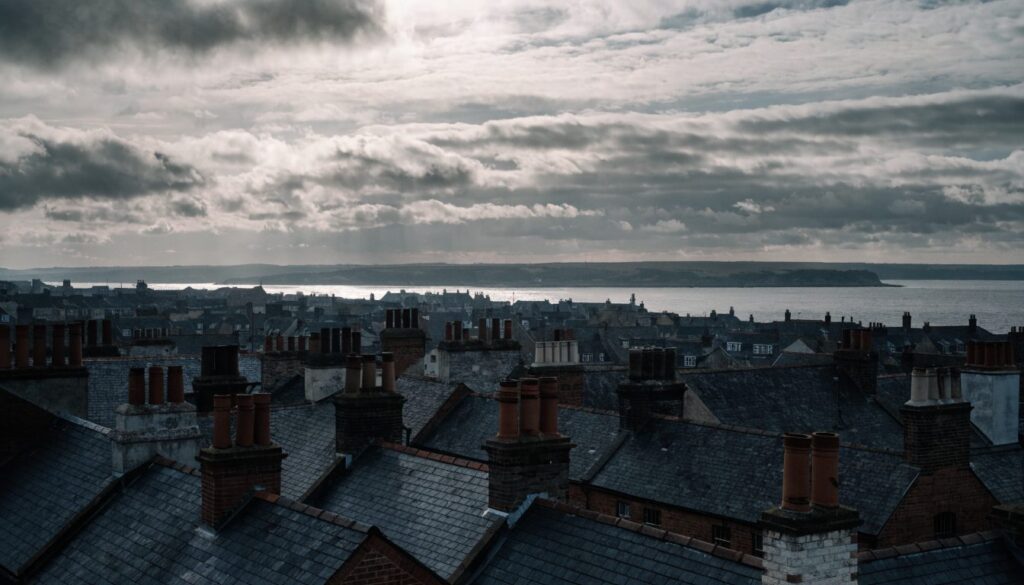
The result is a city where the roof over your head depends heavily on which side of that line your street fell. The council’s own City Centre Conservation Area appraisal describes the reconstruction area as buildings that have “a horizontal emphasis to their massing and articulation and flat roofs” — pitched roofs there are the exception, not the rule. A short walk away, in Devonport, on the Hoe and around the Barbican, the surviving Georgian and Victorian stock is documented as natural slate, including the hipped slate roofs on Admiralty House and Hamoaze House.
Those are two different trades on two different buildings, sometimes on the same street. We work on both, and we will tell you plainly which one you have.
Built on straight answers
We tell you what we actually find
If a repair will do, we say so. If it will not last, we say that too, and show you why. No pressure, and no work you did not need.
Fixed for real exposure
The Met Office records around 16 gale days a year at Plymouth, against 7 at Yeovilton and 4 near Bristol. BS 5534 has withdrawn any reliance on mortar to resist wind uplift, so we specify mechanical and dry-fixed systems accordingly.
Conservation areas handled properly
Plymouth has 15 conservation areas. A dormer or roof enlargement can never be permitted development in any of them, and rooflights must not sit more than 150mm above the roof plane. We work to that from the start.
One point of contact
You deal with the same person from the first look at the roof through to the last sheet of lead. Questions get answered, and the site gets left clean.
Roofing Services Across Plymouth
Roof Repairs
Slipped and broken slates, failed valleys, leaks around chimney stacks and parapet gutters. We find the actual source rather than patching where the water shows.
Read more →Re-Roofing
Full strip and recover when a roof has reached the end of its life, with battens, underlay and fixings specified for the exposure of your street.
Read more →Flat Roofs & EPDM
Extensions, garages, dormers and the flat-roofed stock the city centre rebuild left behind. Falls, drainage and detailing done properly.
Read more →Leadwork
Soakers, flashings, valleys, parapet gutters and chimney work on Plymouth’s Georgian and Victorian stock, sized and fixed to code.
Read more →Guttering, Fascias & Soffits
Rainwater goods that cope with an average 1,037mm of rain a year, and the timber behind them when it has taken on water.
Read more →Emergency Callouts
Storm damage, sudden leaks and slipped slates after a gale. Temporary protection first, permanent repair once we can work safely.
Read more →Roofers serving Plymouth and the surrounding areas
We are a service-area business covering the city and its immediate fringe. If you are just outside these districts, call and ask — we will tell you honestly whether we can reach you.
Roofing in Plymouth: A Local Guide
The Blitz line, and why it still matters
English Heritage’s characterisation study of Plymouth maps bomb damage into two distinct outcomes: areas cleared and rebuilt on Abercrombie’s new grid, and areas rebuilt within the older street pattern. That single planning decision is why the city centre is dominated by flat roofs while Peverell, Mutley, Mannamead, Stoke, Ford and Lipson remain classified as Victorian and Edwardian, with the pitched slate that goes with them. Knowing which you are standing under changes the whole approach to a repair.
Slate, and why the South West fixes it differently
The SPAB’s technical guidance on slating in South West England records that slate-hanging on walls is common across Devon and Cornwall specifically to protect south and west facing elevations from prevailing driving rain, and that slates were traditionally dry-laid in sheltered areas but bedded in mortar in exposed ones. Plymouth sits firmly in the exposed category, and the detailing on an older roof here often reflects that.
Wind: Plymouth is not an inland town
The Met Office puts Plymouth at roughly 16 gale days a year, where Yeovilton in Somerset sees 7 and Long Ashton near Bristol only 4, and describes the prevailing direction across the South West as predominantly south-westerly — which here means straight in off Plymouth Sound. Annual rainfall at Mountbatten averages 1,037mm, and the wettest months and the windiest months are the same four: October through January. When the city’s Civic Centre was designed in the late 1950s, its glazing was specified to withstand recorded wind speeds of up to 100mph. That is the environment a Plymouth roof works in.
If your home is in a conservation area
There are 15 conservation areas in Plymouth, from the Barbican and the Hoe to Devonport, Stoke, Mannamead, Plympton St Maurice and Turnchapel. Under the General Permitted Development Order, a dormer or any roof enlargement on a house in a conservation area is never permitted development — it always needs planning permission. Rooflights remain permitted development, but must not protrude more than 0.15 metres beyond the plane of the existing roof slope. It is worth knowing that before the scaffold goes up rather than after.
North Prospect and the non-traditional houses
North Prospect, originally Swilly, was the city’s first council housing under the 1919 Addison Act. The council’s own area planning statement records steel-framed DorlonCo and precast concrete Stonecrete houses there, many now in poor structural condition, and describes the prevailing form as rendered or half-rendered elevations under hipped roofs with grey slate or brown roof tiles. Non-traditional construction needs to be identified before work starts, not discovered halfway through.
What Our Plymouth Customers Say
“Had a few tiles damaged after the recent weather and these guys sorted it out quickly. No fuss, no pressure, and the repair looks spot on. Really good local service.”
“From getting the quote to finishing the job, everything was handled professionally. They replaced part of our roof and the difference is brilliant. The lads were respectful of the property and cleaned up properly afterwards.”
“Called them after noticing water coming through around the chimney. They came out, found the problem straight away and explained everything clearly before doing the repair. Fair price and a job well done.”
Comments from Plymouth customers, published as supplied.
Get your free, no-obligation quote today
Tell us what is going on with your roof and we will get back to you quickly with honest advice and a clear, written quote.
Request a Free QuoteRoofer Plymouth
Roofing contractors covering Plymouth and the surrounding areas. Service-area business — we come to you.